Crafting in Guild Wars 2 remains a cornerstone of the endgame, serving as the primary method for obtaining powerful Ascended and Legendary gear. This guide will walk you through the most cost effective and profitable paths to level 500, utilizing modern tools like GW2Crafts and most Profitable Crafting Strategies.
Crafting Disciplines
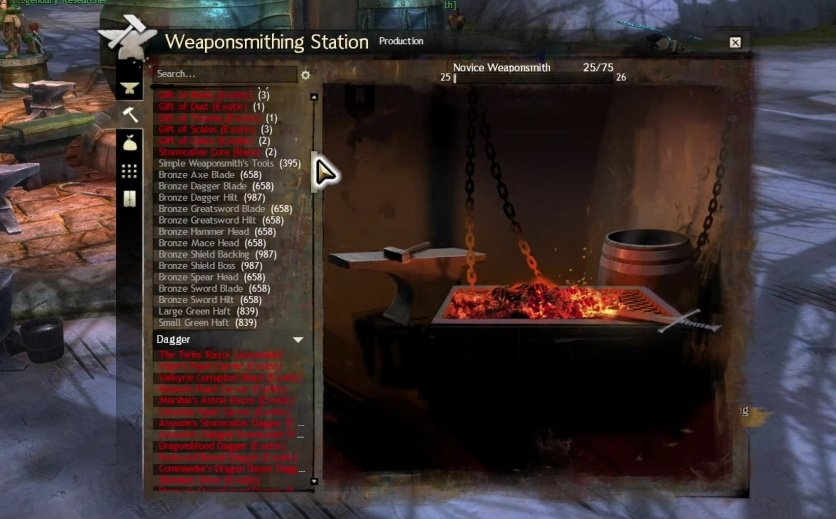
Guild Wars 2 features 10 disciplines, each serving a specific role in your character’s progression. Here is a breakdown of every discipline:
Armor Disciplines (Max Level: 500)
These disciplines create armor, runes, and inventory bags.
 Armorsmith: Crafts Heavy Armor for Guardians, Warriors, and Revenants. Also makes metal inventory boxes.
- Leatherworker: Crafts Medium Armor for Rangers, Thieves, and Engineers. Also makes leather inventory packs.
- Tailor: Crafts Light Armor for Elementalists, Mesmers, and Necromancers. Also makes cloth inventory bags.
 Armorsmith: Crafts Heavy Armor for Guardians, Warriors, and Revenants. Also makes metal inventory boxes.
 Leatherworker: Crafts Medium Armor for Rangers, Thieves, and Engineers. Also makes leather inventory packs.
 Tailor: Crafts Light Armor for Elementalists, Mesmers, and Necromancers. Also makes cloth inventory bags.
 Weapon Disciplines (Max Level: 500)
These disciplines create weapons and sigils.
- Weaponsmith: Forges Melee Weapons and shields (e.g., Swords, Greatswords, Axes, Daggers, Hammers, Shields, Spears).
- Huntsman: Manufactures Ranged and Utility Weapons (e.g., Longbows, Shortbows, Rifles, Pistols, Torches, Warhorns, Harpoon Guns).
- Artificer: Creates Magical Weapons (e.g., Staves, Scepters, Foci, Tridents) and consumable potions/tuning crystals.
 Weaponsmith: Forges Melee Weapons and shields (e.g., Swords, Greatswords, Axes, Daggers, Hammers, Shields, Spears).
 Huntsman: Manufactures Ranged and Utility Weapons (e.g., Longbows, Shortbows, Rifles, Pistols, Torches, Warhorns, Harpoon Guns).
 Artificer: Creates Magical Weapons (e.g., Staves, Scepters, Foci, Tridents) and consumable potions/tuning crystals.
 Consumables & Utility
- Chef (Max Level: 500): Prepares Food that provides temporary combat buffs and experience gain. It is unique for using its own set of ingredients.
- Jeweler (Max Level: 400): Crafts Trinkets (Rings, Amulets, Earrings). In 2026, it remains a primary source for Jade Bot components.
- Scribe (Max Level: 400): Primarily for Guild Content, crafting decorations for Guild Halls and guild-wide consumables.
- Handiworker (Max Level: 500): A newer discipline focused on crafting Homestead Decorations for player housing.
 Chef (Max Level: 500): Prepares Food that provides temporary combat buffs and experience gain. It is unique for using its own set of ingredients.
 Jeweler (Max Level: 400): Crafts Trinkets (Rings, Amulets, Earrings). In 2026, it remains a primary source for Jade Bot components.
 Scribe (Max Level: 400): Primarily for Guild Content, crafting decorations for Guild Halls and guild-wide consumables.
 Handiworker (Max Level: 500): A newer discipline focused on crafting Homestead Decorations for player housing.
 Leveling Strategy
The strategy for leveling crafting disciplines revolves around efficiency, discovery, and external tools to minimize gold waste and maximize character experience.
The Discovery Method
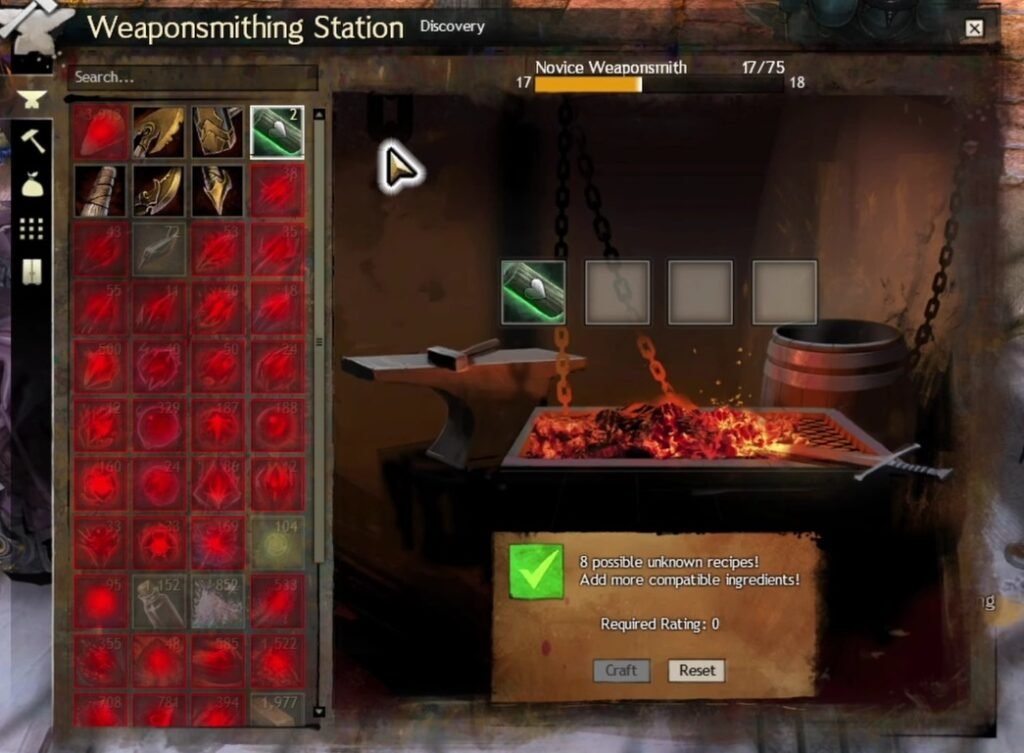
Discovery is the most efficient way to gain crafting XP.
- Refinement First: Always start a new tier (every 75 levels) by refining raw materials (e.g., turning Ore into Ingots). This provides “free” XP until the recipe turns grey.
- Avoid Repetition: Never craft the same item repeatedly if you can discover a new recipe instead. Discovery grants a 100%–150% bonus to crafting XP.
- Recipe Structure: Standard leveling involves crafting two components (like a glove lining and padding) and combining them with an Insignia or Inscription in the Discovery tab.
Boosters and Masteries
To reach level 400 or 500 faster, stack these bonuses:
- Pact Commander Mastery: Unlocking
 Productive Downtime grants a permanent bonus to crafting XP across your account.
 - Guild Boosts: Visit your Guild Hall’s tavern to activate a Guild Crafting Boost, which increases critical crafting chance.
 Crafting Critical Chance Boost: This provide a temporary critical crafting chance, often resulting in “bonus” levels for the same amount of materials.
 Productive Downtime grants a permanent bonus to crafting XP across your account.
 Guild Crafting Boost, which increases critical crafting chance.
 Crafting Critical Chance Boost: This provide a temporary critical crafting chance, often resulting in “bonus” levels for the same amount of materials.
 Strategic Resource Management
- External Tools: Use GW2Crafts.net. This site tracks real-time Trading Post prices and generates the cheapest possible list of items to buy to reach your goal.
- Character Leveling: leveling up discipline to level 400 grants exactly 7 character levels, while level 500 grants 10 levels.
- Research Notes: Since 2022, players often check the “Automatically salvage output with a research kit” box while leveling. This converts your “junk” leveling items into valuable Research Notes, which are required for endgame gear.
Recommended Leveling Order
- Cheapest: Chef and Artificing are generally the most affordable to max out.
- Most Useful: Armorsmithing or Weaponsmithing are recommended for your first “main” character to ensure you can craft your own gear.
Profitable Crafting Strategies
Profitable Craft in Guild Wars 2 is less about bulk production and more about managing time gates, currency conversion, and market volatility.
Daily Crafting Method
To maximize your Gold Farming per day, your daily crafting routine should focus on items restricted to one per day production. These are profitable because you are essentially selling your Daily Cooldown to players who lack the time or level to craft them.
The Essential Four Ascended Materials
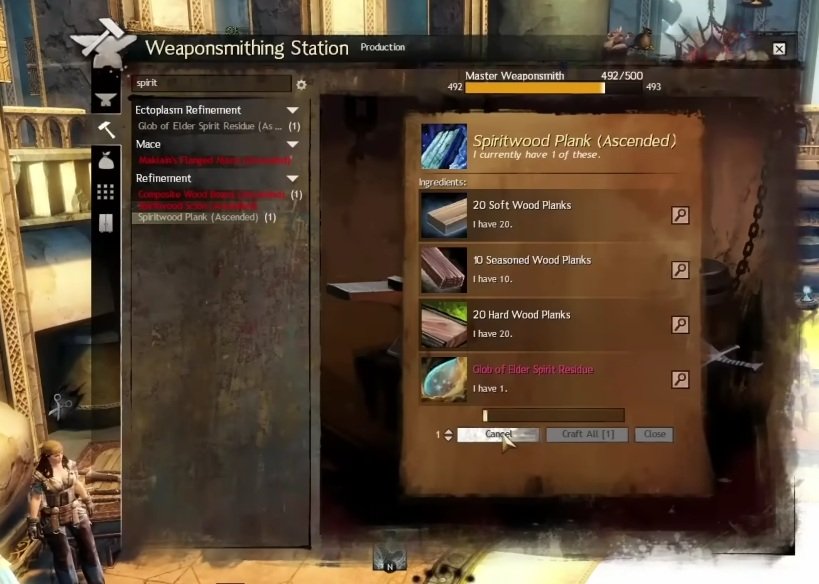
These require Level 450 in their respective disciplines and are the most consistent gold-makers:
- Deldrimor Steel Ingot (Armorsmith/Artificer/Huntsman/Weaponsmith): Uses Iron, Steel, Darksteel, and Mithril.
- Spiritwood Plank (Artificer/Huntsman/Weaponsmith): Uses Soft, Seasoned, Hard, and Elder Wood.
- Bolt of Damask (Tailor/Armorsmith/Leatherworker): Uses Wool, Cotton, Linen, and Silk.
- Elonian Leather Square (Leatherworker/Huntsman/Tailor/Armorsmith): Uses Thin, Coarse, Rugged, and Thick Leather.


Research Note Optimization

Research Notes are a cornerstone currency for endgame crafting (like Legendaries) and can only be obtained by salvaging player crafted items.
- The Strategy: Identify the current “cheapest” item to craft specifically for salvaging into notes (often Level 70-80 fine rarity armor or certain potions).
- Profit Loop: Craft high demand endgame recipes that require Research Notes (like Jade Bot Cores) and sell them to players who prefer to pay gold rather than grind for notes themselves.
 Jade Bot Cores) and sell them to players who prefer to pay gold rather than grind for notes themselves.
 Consumables (Chef & Artificer)
High level PvE content like the Visions of Eternity Raids ensures a constant demand for specific foods and utilities.
- Feasts: Craft Feast versions of top tier foods (like those providing Power/Ferocity) often yields higher margins than individual portions.
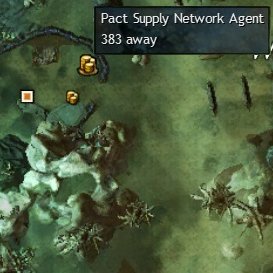
- Pact Supply Network: Use the Pact Supply Network Agents daily to buy rare recipes (like Sharpening Stone Stations) which can be crafted for significant profit during peak raid times.
Homestead Refinements
With the introduction of expanded housing, the Handiworker discipline offers new profit avenues.
- Efficiency Tiers: Upgrade your Homestead refinement efficiency to reduce material costs, then craft high-demand decorations or specialized building materials for other players’ homes.
To maximize these profits, always use GW2Efficiency to check real-time material costs vs. sale prices before starting a large project.
Final Thoughts
While reaching level 500 in your primary disciplines is still a mandatory milestone for anyone chasing Legendary or Ascended gear, the true value lies in how you leverage your daily cooldowns and masteries. The introduction of Homesteads and the continued reliance on Research Notes have ensured that even low tier crafting remains relevant and profitable for the long term.