The most profitable Crafting Disciplines in Guild Wars 2 are those that allow you to bypass high market premiums by producing your own high demand goods or selling time gated scarcity to other players. While raw material prices fluctuate, specialized disciplines like Weaponsmith, Armorsmith, and Jeweler consistently stand out for their role in creating essential endgame Consumables, Research Notes, and specialized tech like Jade Bot components.
This guide will break down the best Crafting Disciplines for gold making, the S-Tier options to choose for the highest profit.
Armorsmith (Highly Profitable)
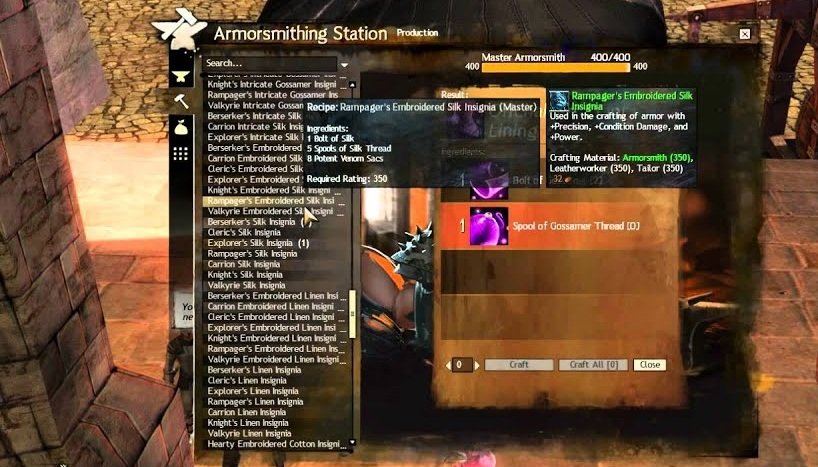
 Armorsmith is widely considered the most essential discipline for players using Heavy Armor (Guardians, Warriors, Revenants) and a reliable source of daily gold.
Production & Benefits
- Gear: Crafts all six pieces of Heavy Armor, from basic white tier to Best in Slot Ascended (Rating 500).
- Consumables: Produces
 Runes combat enhancements for armor.
 - Daily Cooldowns: At level 450+, you gain access to the most consistent time gated profits in the game by refining lower tier materials into once per day items like Deldrimor Steel Ingot, Bolt of Damask, and Elonian Leather Square.
 Runes combat enhancements for armor.
 Deldrimor Steel Ingot,
  Bolt of Damask, and
  Elonian Leather Square.
 Profit Strategies
- Daily Gated Materials: The most reliable profit comes from crafting a Lump of Mithrillium daily to create a Deldrimor Steel Ingot. In some market cycles, selling these can net a steady 20–50 silver profit per click.
- Ascended Insignias: For advanced crafters, using account-bound Glob of Dark Matter (from salvaging Exotics) to craft tradable Ascended Insignias (e.g., Ahamid’s Soldier Insignia) can yield high margins, sometimes up to 8g per craft depending on current market demand.
- Research Note Generation: Armorsmithing is often used to craft cheap Tier 5 or Tier 6 Rare armor pieces, which are then salvaged with Research Kits to produce Research Notes for Legendary projects.
 Lump of Mithrillium daily to create a Deldrimor Steel Ingot. In some market cycles, selling these can net a steady 20–50 silver profit per click.
 Glob of Dark Matter (from salvaging Exotics) to craft tradable Ascended Insignias (e.g.,
  Ahamid’s Soldier Insignia) can yield high margins, sometimes up to 8g per craft depending on current market demand.
 Research Notes for Legendary projects.
 Jeweler
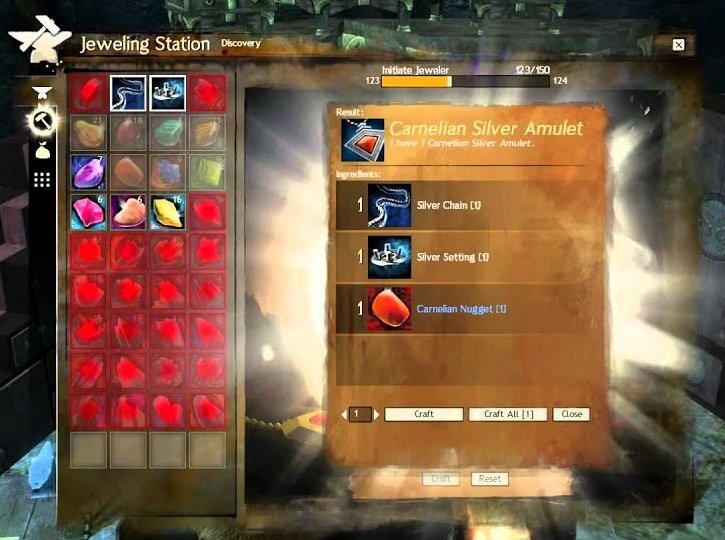
 Jeweler remains a specialized and cost-effective crafting discipline. While it is one of the few disciplines still capped at level 400, it has found a critical niche in modern endgame gold making through Jade Bot technology and currency conversion.
Production & Benefits
- Essential Trinkets: Crafts rings, amulets, and earrings (accessories) for all classes from level 0 to 80.
- Jade Bot Components: Jewelers are the primary source for Jade Bot Cores and specialized sensor/service modules.
- Legendary Components: Required for crafting various Legendary Gifts (e.g., Gift of Music, Gift of Ice) and statues used in high tier legendary weapons.
- Unique Refinements: Produces Xunlai Electrum Ingots (Ascended tier), a vital material for many endgame recipes that requires a daily time gated Lump of Mithrillium .
 Jade Bot Cores and specialized sensor/service modules.
 Xunlai Electrum Ingots (Ascended tier), a vital material for many endgame recipes that requires a daily time gated
 Profit Strategies
- Jade Bot Market: Crafting and selling high tier (Tier 10) Jade Bot Cores often yields high margins, as these are “best in slot” for character health and utility.
- Research Note Generation: Jeweler is often the most convenient way to farm Research Notes. Players mass-craft cheap mithril earrings or rings and use a Research Kit to convert them into notes.
- Time-Gating: Crafting the daily Xunlai Electrum Ingot is a low-effort way to capitalize on daily resets, as these ingots are needed for advanced expansion content.
- Rift Motivations: Jewelers can craft various tiers of Rift Motivations, which are in high demand for players farming essences in Secrets of the Obscure and beyond.
 Rift Motivations, which are in high demand for players farming essences in
 Weaponsmith
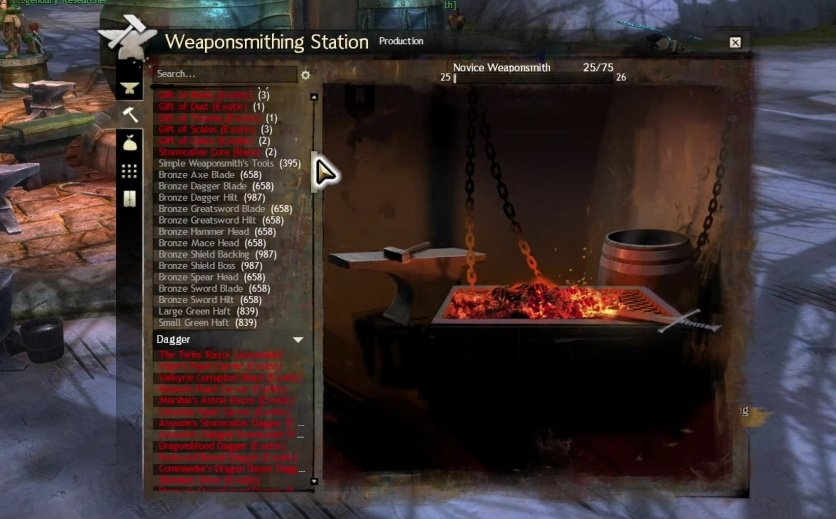
The  Weaponsmith remains the heavy hitter of the crafting world in Guild Wars 2. It is the essential discipline for martial classes: Warriors, Guardians, and Revenants. specializing in forging the melee tools and shields that define the frontline of Tyrian combat.
Production & Benefits
- Martial Arsenal: Crafts a vast array of melee weapons including Greatswords, Swords, Axes, Daggers, Hammers, Maces, Shields, and Spears.
- Ascended Weaponry (Level 500): Provides the ability to craft Best in Slot (BiS) weapons with customizable stats, necessary for high tier Fractals and Raids.
- Sigils & Consumables: Produces powerful Superior Sigils and utility sharpening stones that grant flat damage bonuses based on your character’s stats.
- Legendary Foundation: It is a primary discipline used for crafting Legendary Precursors for several weapon types, particularly for Generation 1 and Generation 3 legendaries.
 Superior Sigils and utility sharpening stones that grant flat damage bonuses based on your character’s stats.
Profit Strategies
- Daily Time-Gates: Just like the Armorsmith, the Weaponsmith relies on the Lump of Mithrillium to create Deldrimor Steel Ingot. Selling these daily is a consistent, low-effort profit source.
- Aurene (Gen 3) Precursors: crafting and selling Generation 3 precursors can yield 60–100+ gold in profit, depending on market demand and Imperial Favor availability.
- Discovery Flipping: Certain rare weapons (like Greatswords or Swords) can sometimes be crafted and sold for a profit if materials are bought via “Buy Orders,” though this requires active market monitoring.
- Research Note Generation: Weaponsmiths often craft cheap mithril tier daggers or axes to salvage for Research Notes, which are then used to craft high value endgame items like Jade Bot Cores.
Final Thoughts
The landscape of profitable crafting in Guild Wars 2 is defined by a player’s ability to turn daily patience into liquid gold. The most lucrative strategy isn’t found in mass producing common items, but in mastering the time gated economy. By consistently refining high tier materials like Deldrimor Steel and Xunlai Electrum, you are effectively selling your account’s daily cooldown to wealthier players who are in a rush to finish their Legendaries.